
How to Use Star Anise in Chinese Cooking
Learn how much whole star anise to add to Chinese braises, broths and soy eggs, when to remove it, and how to keep its licorice aroma in balance.
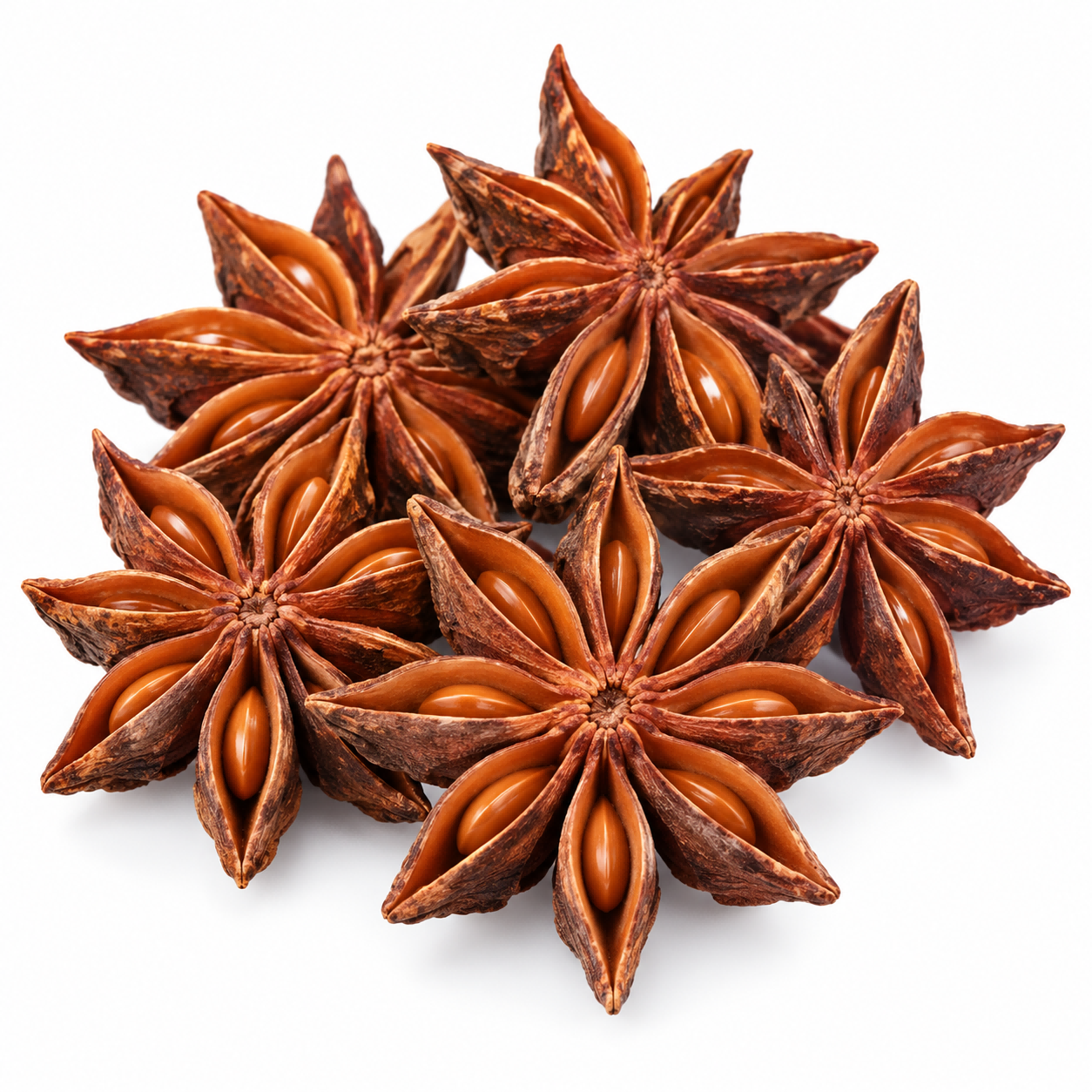
One whole star anise can season a pot of soy-braised chicken. Two can leave a small batch of broth tasting more like licorice than chicken. Start with one intact pod in a medium pot, taste once it has simmered, and lift it out when the aroma is right. Whole pods give you that control. Ground star anise does not.
What star anise adds to a pot
Culinary Chinese star anise has a warm, sweet aroma that recalls licorice, but it does not make a savory dish taste sugary by itself. The aroma comes forward against soy sauce, ginger and scallions. Use food-grade star anise sold as a cooking spice. The dried pod is woody and is meant to flavor the liquid, not to be eaten whole.
How much star anise to use
For a soy braise: Start with one whole pod for about 500–700 g (1–1½ lb) of meat and roughly 2 cups of cooking liquid. Add it with the liquid, simmer gently and start tasting after 15–20 minutes. Remove it while you can still taste the ginger and soy clearly. The rest of the braise can keep cooking.
For a light broth: Start with half a pod per liter (about 4 cups). Fish it out as soon as the broth has a faint sweet aroma. A mesh infuser catches broken points and is easy to lift from the pot.
For soy eggs or tofu: Steep half a pod in about 2 cups of warm soy-based marinade and remove it before storing the marinade with the eggs or tofu. The seasoning should smell mainly of soy and ginger, with anise in the background.
Try it in a ginger-soy chicken braise
Brown about 600 g (1⅓ lb) of chicken thighs in a little oil. Add four slices of ginger, two roughly cut scallions, 2 tablespoons light soy sauce, 1 tablespoon Shaoxing wine if you use it, and one whole star anise. Pour in enough water to come roughly halfway up the chicken. Simmer gently, turning the pieces as needed, until cooked through. Taste early and remove the pod before reducing the sauce. Serve with rice and spoon a little sauce over each bowl.
What to do when the anise is too strong
Remove the pod first. Then dilute the liquid with a little unsalted stock or water, or mix it with an unspiced batch. Reducing a too-strong sauce only concentrates the flavor. Add a new pod only after tasting, especially if your recipe already includes Chinese five-spice, which often contains star anise.
Buy whole pods when you want more control
Keep whole star anise sealed away from heat and light. To check an older batch, snap a point and smell it. If the scent is faint, replace it rather than adding several pods to a dish. If you are building a spice shelf from scratch, see our Chinese pantry starter guide.